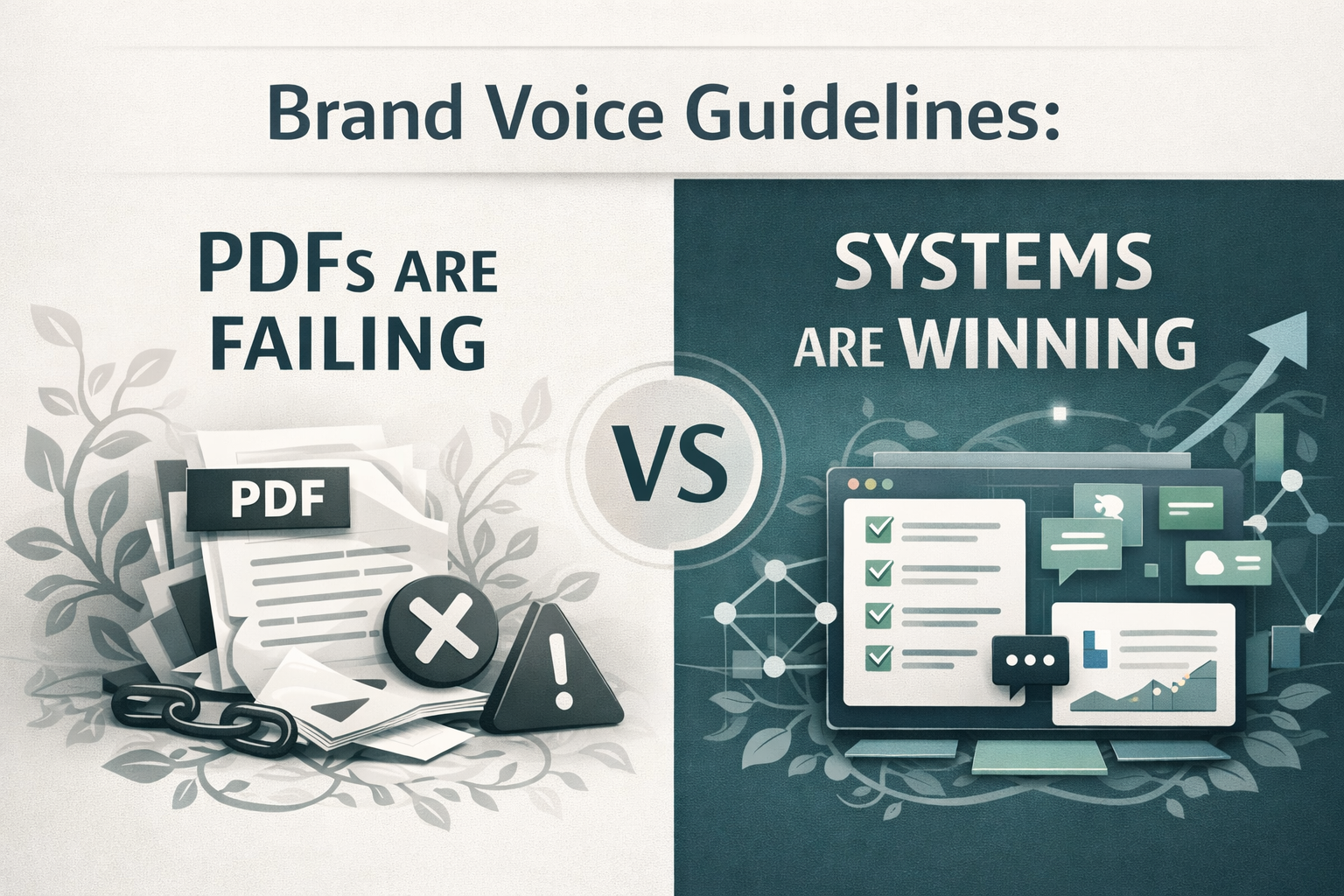
Brand Voice Guidelines: PDFs Are Failing, Systems Are Winning
Someone spent a lot of time creating a forty-page, custom-illustrated brand voice guidelines PDF color-coded by channel. It probably took at least six weeks of stakeholder reviews and a final approval chain that went all the way to the CMO. There was a company-wide kickoff with a slide deck and plenty of enthusiasm on Slack. I get it, I’ve been there. But that was eight months ago, and today the PDF is still nested in its folder. Last opened: tenth of never. Most brand voice problems are not caused by bad writing. They're caused by good documentation that lives outside the workflow. Your guidelines didn't fail because they were wrong; they failed because they were frozen in time.
How to Audit Brand Voice Drift in the AI Era
It’s difficult to articulate what’s off. You can't send one email and say, 'Here—this is the issue.' The trouble isn’t one email; it’s dozens of emails, blog posts, and countless product descriptions that have slowly drifted away from whoever your brand actually is. Brand voice drift is now faster and subtler with AI. Diagnose it precisely using a mixed-method framework to realign your brand's voice and ensure every asset truly reflects who you are.
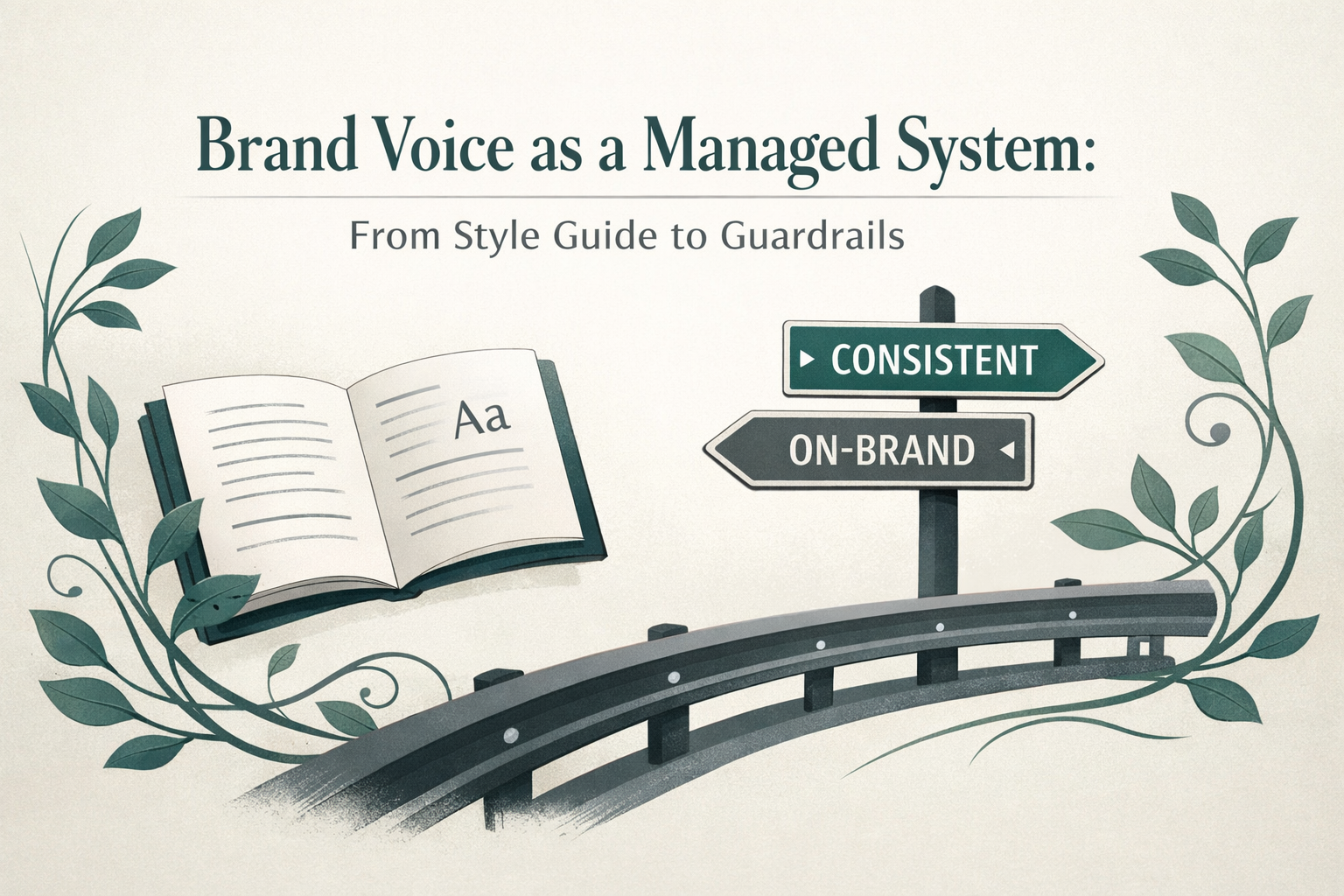
Brand Voice as a Managed System: From Style Guide to Guardrails
Most companies don't have a brand voice problem. They have a brand voice system problem. Brand teams eventually have to reckon with the fact that brand voice is no longer an editorial preference; it’s basic operational infrastructure. If it isn't built as a system with real constraints, workflow gates, and a meaningful way to measure results, your voice will drift. If you aren’t very careful, adding generative AI will Tokyo Drift it at high speed.